
Freaking the Mind: Exploring the Rhetoric of Magic in Criss Angel’s Mindfreak by Joseph Zompetti, Illinois State University
Abstract:

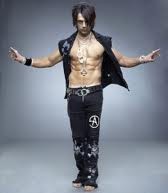
The art of magic has enjoyed increasing visibility and a resurgence of interest, as demonstrated by the rising popularity of magicians, such as David Blaine, Hans Klok, Franz Harary, David Copperfield, and the production of two major motion pictures within a single year – The Prestige and The Illusionist.  With his number one-rated cable television show and his recent ten-year contract for a major Vegas show with Cirque de Soleil at the Luxor, Criss Angel Chris Angelpersonifies the modern-day magician who is at the forefront of the magic renaissance.  This paper attempts to examine the rhetorical potency of magic by analyzing the first season of Criss Angel’s award-winning television show, Mindfreak.  By using Kenneth Burke’s concepts of symbolic action and identification, this paper explores the symbolic, albeit persuasive, dimension to magic as exemplified by Criss Angel.

Introduction

 Conjurers try to convey the impossible. They attempt to convince the audience that their performance is “real” magic.  In the end, the magician is performing, just as an actor or musician would do, in order to convince the audience that what they are doing is not only entertainment, but also substantive – the illusionist wants us to believe and feel their act is occurring and is realistic.  Although we know the “magic” on stage doesn’t actually happen – the assistant can’t disappear and the levitation is not within the realm of possibility – we still see, feel, and believe that what occurs on stage is real.  That is the magician’s trade; it is the cornerstone of persuasion.  We may think that sales persons, lawyers, and clerics are the masters of persuasion, but in “reality,” magicians are the foremost experts of persuasion.  They not only entertain us, but they also reveal to us what is not real.  They perform what we know is impossible.  In effect, they sell us a bill of goods that we know we shouldn’t buy; thus, magic’s persuasive charm.  According to Devant, a famous magician from the early 1900s, magic is “the feeling that we have seen some natural law disturbed” (p. 8). And as Aristotle remarked over 2,000 years ago, the “available means of persuasion” is what we know as “rhetoric” (Aristotle, p. 36). As a result, magicians are the modern rhetoricians, keen on persuading the rest of us that what is going on is really happening, when in actuality, the occurrence is nothing more than, literally, smoke and mirrors.

What may not seem so clear, however, is exactly how magic functions rhetorically.  The magic “act” may be nothing more than a simple sleight-of-hand or misdirection.  Yet, many magic acts, or what Criss Angel calls “demonstrations,” are much more involved.  They may be combined with other acts to produce illusions or altered perceptions of reality.  These acts, then, are an art form that require years of practice and study.  Whether it is a basic card trick or a Vegas-style illusion, the demonstration bends how one views the world.

The art of magic has enjoyed increasing visibility and a resurgence of interest, as demonstrated by the rising popularity of magicians, such as David Blaine, Hans Klok, Franz Harary, David Copperfield, and the production of two major motion pictures within a single year – The Prestige (Nolan, 2006) and The Illusionist (Burger, 2006).  With his number one-rated cable television show and his recent ten-year contract for a major Vegas show with Cirque de Soleil at the Luxor, Criss Angel personifies the modern-day magician who is at the forefront of the magic renaissance.  He even argues in the first episode of Mindfreak that “magic today is not popular culture; I’m hoping to change that.  Magic hasn’t garnered the respect as music or film, so that is what I’m trying to do increase its visibility with pop culture” (Angel, 2005a).

This paper attempts to examine the rhetorical potency of magic by analyzing the first season of Criss Angel’s award-winning television show, Mindfreak.  In order to understand more clearly how the art of magic does this, I will use the Burkean concepts of symbolic action and identification to investigate how the meanings behind the symbols in magic function rhetorically.  Since Burke remarks that “Words are the signs of things,” we shall investigate the signs behind the magic (Burke, 1966, p. 363).  By looking at Mindfreak, I will focus on this connection between magic and rhetoric.

Review of Literature

The rhetorical dimension of magic has been relatively unexplored.  In fact, most scholars have distanced themselves from studying magic because they deem it unsophisticated or non-academic.  This distancing has its origins in antiquity.  For example, the Hippocratic treatise, On the Sacred Disease, views magic as deceptive and contrasts it with the sacred principles of religion and piety (de Romilly, 1975, p. 27).  The proclivity of associating magic more with religion and the occult than with the art of rhetoric is commonplace (Aune, 2003; Dunn, 2005; Kennedy, 1998; O’Keefe, 1982).  In addition, Earle J. Coleman describes the lack of attention magic has received in most of the major disciplines, including psychology, sociology, history, and theatre (Coleman, 1987).  Unfortunately, due to the inattention magic has received from the liberal arts, magic has been relatively unexplored as a serious art form.

Despite the sparse attention magic has received by scholars, some have discussed how magic and theatre have a strong relationship, especially since magic may be considered a performative art (Angel, 2007; Barnouw, 1981; Blaine, 2002; Fitzkee, 1944; Kennedy, 1998; Steinkraus, 1979).  Furthermore, many have written about how magic is an art form, although its status as an “art form” is not associated, necessarily, with any particular academic area of study (Coleman, 1987; Dawes, 1979; de Romilly, 1975; Steinmeyer, 2003; Taylor, 1979).  Even Burke, in A Rhetoric of Motives, refers to magic as an “art” (1969, p. 42).  Although some consider magic to be an “art” form, most scholars overlook magic as an important component worthy of study, much less as a valued communicative act.

William Covino (1992) discusses the relationship between symbols and magic since antiquity, especially their simultaneous marginalization by so-called scientific reasoning.  Elsewhere, Covino argues that magic is rhetorical in the sense that it is mysterious and that language has magical qualities (1994; 2002).  However, he provides little support, other than his own perspectives, on the meaning-formation of magical acts.  Nor does he explore how magic utilizes persuasive symbols.  In an earlier work, Covino suggests that magic and rhetoric are synonymous, especially since the “congeniality of magic and technical rhetoric results from the real power of rhetoric to design and alter reality” (Covino, 1991, p. 25).  In other words, Covino argues that language use in society borrows from principles of magic, especially regarding the generative capacity of language to portray collective or social ideas.  In the end, while Covino makes the argument that magic and rhetoric are related, he emphasizes the magic in language, rather than the other way around.

In extending the assumption that there is some connection between rhetoric and magic, John O. Ward (1988) does a worthwhile job of chronicling the meanings given to rhetoric and magic.  Tracing the historicity of both magic and rhetoric from ancient Greece and Rome to the Middle Ages, Ward argues that at different times, rhetoric is associated with magic, and at other times, rhetoric is seen as technȇ.  In other words, at particular moments, the influence of magic can be seen in the conception of rhetoric, while at other times, rhetoric appears divorced from magical inspiration as it is viewed as purely instrumental in nature.

Perhaps the most important examination of both rhetoric and magic for our purposes occurs in de Romilly’s study, Magic and Rhetoric in Ancient Greece (1975).  When examining The Gorgias and The Republic, de Romilly argues that rhetoric and magic are co-productive.  In fact, she describes the relationship to the Greek concept of apatȇ:

Apatȇ, or illusion, is the aim of rhetoric. It is also the aim of magic, when the magician calls up phantoms and makes people believe in things that do not exist.  That this is the very principle of rhetoric is obvious. An antilogy, where one speech opposes another, shows that it is possible to see in the same reality now one aspect and now another. Protagoras himself was proud of making the weak thesis strong, and the strong thesis weak. (p. 26-27)

While de Romilly sets up this relationship between magic and rhetoric, she does not expound on this argument (in fact, it only occurs in the span of two pages in the entire book), nor does she describe in any detail how magic has rhetorical implications or persuasive qualities.  But, her reference of this relationship does help us by providing the foundation for analyzing the persuasive elements of magic.  If magic and rhetoric share the concept of illusion in common, then we may begin our examination of Criss Angel’s demonstrations as rhetorical acts.

Burke, Symbolic Action and Identification

Before examining Criss Angel’s demonstrations to see what, if any, rhetorical connection exists with the art of magic, it will be helpful to briefly recall Kenneth Burke’s perspectives on symbolic action and identification.  Burke’s important work on human symbol use centers on the foundation of how the meaning of language is not only shared among its users, but it also shapes the way those users think, feel, and express.  Meaning, therefore, is central to the investigation of symbolic action (or the use of language) and identification (the manner and form taken to reach other symbol users).

For Burke, symbolic action deals with the way language reflects reality and shapes our perceptions of the world around us (Gusfield, 1989, p. 8).  This happens, of course, because humans use language – or the meaning ascribed to the symbols used in language – to communicate their reality or perceptions of their world.  The meaning of symbols is the focal point of all investigations into rhetorical acts (Gusfield, 1989, p. 6).   In fact, according to Gusfield, who edited the important work entitled Kenneth Burke: On Symbols and Society, “Language cannot be separated from action because what the action means and what it is addressed to is symbolic in its content.  Action cannot be separated from language because the situation within which the actor acts is defined and understood by the actor through the concepts available to him [sic]” (1989, p. 11).  Thus, Burke provides important insight into how the use of symbols shapes our perceptions – a key component to the art of magic.  In terms of rhetoric, the meaning behind symbols is vital, since, as Burke describes, “Wherever there is persuasion, there is rhetoric.  And wherever there is ‘meaning,’ there is ‘persuasion’” (1969, p. 172).

Additionally, Burke describes the process by which a symbol user attempts to reach, or persuade, other symbol users, or, for our purposes, an audience.    When discussing identification, Burke writes “A is not identical with his [sic] colleague, B.  But insofar as their interests are joined, A is identified with B.  Or he may identify himself with B, even when their interests are not joined, if he assumes that they are, or is persuaded to believe so.  Here are ambiguities of substance.  In being identified with B, A is ‘substantially one’ with a person other than himself.  Yet at the same time he remains unique, an individual locus of motives”  (Emphasis in original, pp. 20-21).  In other words, identification is a process that transcends persuasion, while it still uses persuasion to achieve its aim.  Instead, identification is the moment when one person believes they fully share the perspective held by another.  If I can convince my students to trust me as their instructor because I, too, was a student who sat in similar chairs they now sit in not too long ago, then I can identify with them and, perhaps more importantly for this example, they can identify with me.

To understand how magic functions rhetorically, we can use the concepts of symbolic action and identification to view how Criss Angel’s demonstrations resonate, as texts, with his audience.  Burke actually speaks to this relationship, although he does not mention symbolic action specifically:

…one comes closer to the true state of affairs if one treats the socializing aspects of magic as a ‘primitive rhetoric’ than if one sees modern rhetoric simply as a ‘survival of primitive magic.’  For rhetoric is not rooted in any past condition of human society.  It is rooted in an essential function of language itself, a function that is wholly realistic, and is continually born anew; the use of language as a symbolic means of inducing cooperation in beings that by nature respond to symbols (Emphasis in original, 1969, p. 43).

Furthermore, Burke briefly discusses the role of magic in a functional process of persuasion.  Given magic’s persuasive aspects, the process by which this persuasion occurs might be considered identification:

The term ‘rhetoric’ is no substitute for ‘magic,’ ‘witchcraft,’ ‘socialization,’ ‘communication,’ and so on.  But the term rhetoric designates a function which is present in the areas variously covered by those other terms.  And we are asking only that this function be recognized for what it is: a linguistic function by nature as realistic as a proverb…For it is essentially a realism of the act: moral, persuasive – and acts are not ‘true’ and ‘false’ in the sense that the propositions of ‘scientific realism’ are.  And however ‘false’ the ‘propositions’ of primitive magic may be, …it is different with the peculiarly rhetorical ingredient in magic, involving ways of identification that contribute variously to social cohesion (Burke, 1969, p. 44).

Thus, both symbolic action and identification serve to frame magic as a uniquely rhetorical, albeit persuasive, communicative art.  Burke argues that magic, as a time-tested art practiced by primitive humans, is premised on the basic structures of language for it to operate.  By examining a textual case study, such as Criss Angel’s Mindfreak, we should be able to see more clearly the rhetorical connection with magic.

Freakin’ The Mind: Examining Mindfreak

Criss Angel is fond of saying “what you see is what you get” (Angel, 2005a, 2005b, 2005c, 2005h).  This, of course, is a double entendre, meaning it can be understood in two different ways.  On one hand, he could be saying that what we visibly see is what is real (i.e., what you see is what you get). But, on the other hand, he could also be saying that whatever occurs visibly is what should be believed, meaning that whatever tricks occur within our vision should resonate with cognition (i.e., what you see is what you get).  In fact, as one of Criss Angel’s consultants, Banachek, exclaims, “I think that people at home would be very surprised to find out that what they think might be illusion is actually reality, and what they think is reality, might actually be illusion.  Criss is happy to blur that area, he wants people to wonder about what he’s doing.  Because that makes good magic.  If you’re asking questions, he’s doing his job” (Angel, 2005h).  In the end, Criss Angel’s proclamation of “what you see is what you get” is nothing more than a disclaimer for added trickery for the audience.

Of course, this essay is not about how Criss Angel performs his demonstrations.  It is not a manual on revealing the secrets behind the tricks.  Instead, this essay concerns itself with how Criss Angel uses his demonstrations to persuade his audience.  In other words, it concerns itself with the rhetorical strategies used by Criss Angel Chris Angel Symbolto do the following: a) secure his audience’s attention, b) amaze his audience, and c) persuade his audience that his demonstrations are “magic.”  In so doing, this essay intends to suggest that magic is rhetorical, albeit persuasive.  Magic, as exemplified by Criss Angel, is rhetorical since it engages in symbolic action and identification.

Symbolic Action

According to Kenneth Burke, humans are “symbol-using, symbol-making, and symbol-misusing animal[s]” (Burke, 1966, p. 6; 1969, p. 33, 109, 237).  As humans, magicians are no different.  In fact, because magicians need to both entertain and amaze audiences, they are, perhaps, the most profound examples of human symbol-users.  With each trick, or demonstration, magicians use symbols to convey their intention and purpose – namely, to mystify their audience.  As such, Criss Angel does not disappoint.  In numerous ways, he uses symbols – both verbal and nonverbal – to mystify his audiences.  In this way, he uses symbolicity to enhance his magical prowess (Crable, 2003, p. 126).

In the different season one episodes of Mindfreak, Criss Angel displays numerous examples of symbolocity, or symbolic action.  Whether through his explanations of his demonstrations or the demonstrations themselves, Criss Angel exemplifies the symbolicity of a rhetorical act.  In essence, Criss Angel is trying to persuade his audiences that the demonstrations he engages in are real.  As he is fond of saying, “What you see is what you get” (Angel, 2005a, 2005b, 2005c, 2005h).  However, in many demonstrations, Angel fails to remind the audience that what they “see is what they get,” nor does he accentuate the importance of such a philosophy in each instance.  Nevertheless, whether stated explicitly or not, Criss Angel’s demonstrations are typically viewed the way he presents them – i.e., as what he does is what we get.  This means, of course, that some of the demonstrations seen on television may not be a part of Angel’s “what you see is what you get” mantra.

Consequently, Criss Angel uses symbolic action to highlight his demonstrations.  Symbolic action “is the creation (or recreation) of an identity that fits into a culture … symbolic action involves the creation of an integrated world view (or recreation of a culture) and finding a place in that system. Such an accomplishment allows one to ‘feel at home,’ to size up situations, and to avoid epistemological crisis … symbolic action is any strategy for encompassing a situation” (McKercher, 1993).  As such, Criss Angel uses particular symbols in certain situations to provide a certain perspective.  Usually, the perspective involves ordinary situations that perplex the mind.  As Criss is fond of saying, I like “to blur the lines of reality and illusion, I wanted to do a demonstration that would prove that the laws of this physical world can be bent or even broken” (Angel, 2005h).

If symbolic action is how language shapes our realities and perceptions, then many of Criss’s demonstrations do just that.  For example, he uses symbolic action in episode two, “Levitation.”  It utilizes symbolicity, in part, because the idea of levitating connects with the audience.  “The notion of being lighter than air is something that has intrigued every human being for hundreds and hundreds of years” (Kaufman, 2005a).  As Criss says, “I’m going to try to bug some people here in the park” and then he levitates himself in the park (2005b). One person in the audience says, “oh my God, how did he do that?”  The image of his levitation in a public setting creates the perception that he has mystical powers.  There are no visible wires, no noticeable props, no apparent gimmicks.  The demonstration appears real, although we know that there must be something to the trick.  In fact, “It’s something that the street audience, the people who are right there and if you were there you’d see it too, take place in front of your very eyes” (Cohn, 2005).

In another episode, “Super Human,” Criss Angel engages in symbolic action by using symbolic images to create the perception that he has super-human strength. The finale demonstration has Criss lifting a taxi cab in Las Vegas.  Before that, however, he asks several spectators on the street to line-up and consecutively push each other on the shoulders in an effort to push him over.  Even with ten people (mostly burly men), they cannot push Criss over.  One participant says, “It’s like pushing a wall” (Angel, 2005g).  As he ambiguously explains the process, Criss says, “your mind controls your body, and what doesn’t make sense to some people makes sense to others” (Angel, 2005g).  The image of him lifting a taxi also creates the perception that his super-human strength is a reality, hence symbolic action.  Criss explains, “I wanted to accomplish something that looked  to be completely impossible for someone with my weight to be able to do and hopefully that demonstration will inspire others to be able to fulfill their dreams that might seem impossible at that very moment” (Angel, 2005g).  This is important, as Criss indicates, since “If you dream it, you can achieve it,” and later he says, “I’m committed to do things that people don’t think are possible” (Angel, 2005g).

Symbolic action, as has already been described, is a process by which we look at language to inform us of meanings laden within the linguistic code.  In other words, it is the process we use to ascertain meaning in the complex symbol-using process.  What we understand may or may not be a simple perceptual process of the conglomeration of signs.

As such, the symbolic action expressed in Criss Angel’s demonstrations reveals that magic utilizes symbols.  Whether it is words or nonverbal gestures, the magician incorporates symbols for his/her ultimate effect. Of course, the magician also needs to manipulate the audience’s perception of the symbolic context around them.  As Criss Angel suggests, “An illusion exploits the way you visually process something” (Angel, 2007, p. 158). This is particularly true since magic is the “audacious individual use of existing powerful symbols” (O’Keefe, 1982, p. 73). In other words, the symbols used in an illusion are merely a distraction so that the ultimate symbol(s) – the climax of the illusion – demonstrate the importance of a perception of reality.  As Burke posits, “Even if any given terminology is a reflection of reality, by its very nature as a terminology it must be a selection of reality; and to this extent it must function as a deflection of reality” (Burke, 1966, p. 45).  Hence, magic, if done properly, is merely a deflection of reality, and, as such, is only a symbolic perception of one’s (i.e., audience member’s) conception of reality.

Identification

Criss Angel uses identification in the first episode in season one of Mindfreak. Criss, who seemingly is being burned on Freemont Street (one of the busiest streets in Las Vegas), lies down on the pavement after being burned for over 30 seconds, and then the body disappears and we see Criss as one of the aids who is using a fire extinguisher to put out the fire.  He replaces the victim with the rescuer. As Criss states, “I like to play with what people’s fears are; I like to confront those for people, and people have a fear of being burned alive” (2005a).

This is a sentiment that we hear as well in a later episode, called “Building Walk,” where Criss walks down 50 stories of the Aladdin hotel to confront the fear of heights (Angel, 2005h).

A second example of identification occurs in the fourth episode, entitled “SUV Nail Bed.”  The show, among other things, focuses on Criss lying on a bed of eight-inch nails while an SUV is slowly driven over him.  During the commentary leading up to the stunt, Criss says, “I don’t think of pain as most people would probably perceive it … Pain is beautiful thing, when you feel pain, you know you’re alive” (Angel, 2005d).  A little later he says, “Pain is just something that you can overcome” (Angel, 2005d).  The idea that he endures pain as a form of identifying with his audience seems apparent enough.  Before the SUV demonstration, Criss approaches some folks on the street.  He then swallows needles and thread and then pulls them out of his belly button.  The crowd makes comments such as “oh my god,” “oh God that’s crazy,” “that was nuts,” and “I’m freaked out” (Angel, 2005d).  The perceived physical act of pulling needles through one’s flesh clearly illustrates the endurance of pain.  Taking it to another level, the SUV nail demonstration heightens the perception of conquering pain.  As Criss states toward the end of the show, “Failing equals death, so I have no margin for error” (Angel, 2005d).

In another episode, the “Wine Barrel Escape,” Criss Angel is essentially paying an homage to Harry Houdini since he will be padlocked in a wine barrel several stories in the air. As he prepares for the demonstration, Criss Angel tells the audience that the water is too cold and his muscles couldn’t function, so he asks for warmer water.  Lance Burton, who is narrating this episode, says this “isn’t the stunt to try when you don’t have full control of your body” (Burton, 2005).  This all adds to the suspense of the demonstration.  And, to add to the suspense even more, after they initially raise the wine barrel, they bring it down after Criss gave the “abort” signal because, as he says, “a line got caught” which made his wrists get “crushed” (Angel, 2005c).  Lance Burton says this is incredible because Criss Angel had the “presence of mind” to make the call (Burton, 2005). This helps the identification with the audience, as it did in Houdini’s day, because it resonates with the audience’s perception of fear.  As Criss Angel states, “Houdini had this profound effect on people because he connected to them on an emotional level” (Angel, 2005c).  As such, Criss Angel, too, impacts the audience on an emotional, albeit fearful, level.

In another episode, “Buried Alive,” Criss Angel is literally placed into a coffin and buried six-feet under.  Criss remarks, “We’re going to actually have a POV camera in there so that people at home can actually experience  what it feels like to be buried alive” (Angel, 2005e).  Like his other shows, Criss portrays the conquering of basic fears.  Scholars have documented that being buried alive is one of the most basic and dreaded of all fears (Bondeson, 2001).  In this way, Criss Angel is identifying with his audience on a very primal level.  As Banachek, a Mindfreak consultant and accomplished mentalist, remarks, “If something goes wrong, he’s definitely dead” (Banachek, 2005a).  Thus, the fear of dying, especially by being buried alive, triggers an emotional response from the audience.

In two different episodes – “Hellstromism” and “Blind” – Criss Angel demonstrates that muscle and mind reading are crucial to everyday activities of a magician.  In “Hellstromism,” Criss needs to locate certain objects through the touch of a participant who knows where the objects exist.  In “Blind,” Criss relies on Mandi Moore to help him drive a car blind-folded. Of course, he also asks her to think of a place in Los Angeles, without his knowledge, and he drives the car to that location.  In “Hellstromism,” Criss argues that “Muscle reading is basically the ability to actually determine what’s somebody’s thinking by the way their muscles are reacting” (Angel, 2005f).  Later in the episode, noted Mindfreak consultant and Criss Angel friend, Banachk suggests, “A mentalist is somebody who performs magic of the mind, we appear to be psychic, we appear to move objects, read people’s minds, who really get into people’s minds” (Banachek, 2005b, “Prediction”). As a result, as Banachek suggests in a different episode, “the skill of getting into people’s heads is tricky.  It’s so hard, and he has a natural ability.  Creating that vulnerable moment for people so that they really think you’re getting into their head, allows you to truly get into their heads” (Banachek, 2005c).  Thus, Criss Angel uses his powers of mental manipulation to identify with his audience.  By claiming to be able to read people’s minds, Criss provides the perception that he has unique powers that enable him to understand the condition of other people.  This is, perhaps, the quintessence of identification.

As in some of his other shows, Criss Angel uses his illusion of walking down 50 stories of the Aladdin hotel/casino as a demonstration of his ability to conquer another fear – the fear of heights.  In “Building Walk,” Criss literally is shown as walking down the building of the Aladdin.  In one way, this is a form of identification because many people dream to walk up or down a building – much like Spiderman.  As Dale Hindman, the president of the Magic Castle, suggests, “Criss is doing what Harry Houdini did.  Know that that’s what your audiences want, and then go after them with a vengeance and make it public, and do it better than the next guy.  Harry Houdini did that all the time” (Hindman, 2005).  On the other hand, Criss is identifying with his audience, yet again, by confronting a fear – in this case, the fear of heights.  According to Criss, “With ‘Building Walk’ specifically, I try to address people’s fears.  What I’m trying to do is overcome other people’s fears, and hopefully they’ll get the ‘how the hell did he do that’ factor in there” (Angel, 2005h).  In a related way, Richard Kaufman, the publisher of Genii magazine, argues, “most people don’t like to dangerous things themselves, but they like to watch other people do dangerous things.  There’s that aspect of voyeurism that people find intriguing” (Kaufman, 2005b). Yet again, Criss is identifying with the audience because his demonstration deals with a common human fear.  As he claims in the episode, “I think when you confront your fears, you grow as a person.  People everyday don’t live life to its fullest because they’re concerned about getting on planes, they can’t get out of their house, they can’t go on an elevator – they’re so many things that people fear.  So, for me if I can help one person to live their life to the fullest, that means a lot to me” (Angel, 2005h).

Once again, in “Blind,” Criss Angel confronts people’s fears of sensory deprivation.  With taped coins around his eyes in addition to a solid black blindfold, Criss drives Mandi Moore’s care through Los Angeles to a destination of her choosing, but without his knowledge (Angel, 2005i).  Luke Jermay, a Mindfreak consultant, argues, “I don’t believe Criss is psychic; I believe he’s a very skilled performer with a toolbox of techniques that he uses to produce the illusions that he does” (Jermay, 2005).  Nevertheless, even if Criss Angel does not possess mystical powers, his ability to navigate through crisis situations, while appearing to be blind, yet again resonates with the audience who fears losing their own sight.  In this way, Criss identifies with his audience, by means of his own magical demonstrations, in a way that signals his unique abilities that transcend the common person’s basic fears.

As we have seen, Criss Angel attempts to draw his audience into his demonstrations.  Whether it is in the street or on a more massive demonstration of an illusion, Criss Angel tries to bring his audience into his artistic creation.  As Criss stipulates in his book, “When I perform, I use my power, my gifts, my art to help people escape from the ordinary into the world of the extraordinary.  I have the power to help them forget their problems, if only for a few moments” (Angel, 2007, p. 149). The point, of course, is not only to identify with one’s audience, but also to connect with them on a basic, emotional level.  Criss agues that he is able “to take people to places they would never otherwise experience.  The emotional connection is like a passageway to a private world – my private world.  Fantasy and the great unknown have always fascinated people … The wonderment, the unexpected, the moment of ‘wow’ is something I live for” (Angel, 2007, p. 126).  Of course, the “amazement” factor is only part of the equation.  Criss Angel, undoubtedly, wants to “wow” his audience.  However, like most magicians, Criss Angel is also concerned with identifying with the audience in a special, unique way.  For Angel, this connection entails a purpose that signifies that a single person can overcome a particular hardship.  Much like Houdini, Criss Angel tries to overcome the constraints that many people feel that oppress them.  In fact, as Criss argues, “I loved Houdini’s primary message. If I can get out of this situation, you can get out of yours” (Angel, 2007, p. 89). In this way, Criss Angel identifies with his audience in a very important way – he exemplifies the ability to overcome hardship and tribulation.  The capacity to conquer fears and fortitudes is a magician’s sign that he/she is able to transcend the average conundrum.  As a result, they signify that anyone, including the common person, can overcome such difficulties themselves.

Conclusions

Criss Angel provides us a unique opportunity to see how magic and rhetoric intersect.  While not revealing any of his magic secrets, this essay acknowledges Angel’s hard work and unique magical abilities – both on-screen and off.  Furthermore, this paper identifies several different ways that magic is rhetorical.  In some ways, the magical performance is magical in the way it is performed (Steinmeyer, 2003). In other ways, the words the magician uses while performing the act are important (Angel, 2007; Covino, 1992; Steinmeyer, 2003).  In any case, the “trick” or “act” itself in magic is persuasive since it captivates the audience’s attention and convinces them that the trick or act is part of reality.

What is illusion and what is “real” is open to debate.  That is the magician’s trade – to blur reality with illusion. According to Paul Draper, a former consultant to Criss Angel’s Mindfreak, “Magicians provide physical and tangible representations of the miraculous that fools all of our senses. Audiences can take many meanings from this to fit their personal needs and beliefs” (Draper, 2007).  Thus, conjurer’s use the skills of the trade to convince the audience that what is impossible is possible, what is unrealistic is real.

Given the paucity of studies that examine the intersection between rhetoric and magic, this paper treads new territory.  It also provides an opportunity for those interested in the art of magic and the art of rhetoric to see how both can mutually reinforce the other.  And this is really the beauty of a study like this – both objects of analysis can reinforce the other.  In essence, the rhetorical possibilities as well as the rhetorical prowess of magic can illuminate not only the essence of persuasion, but also the practical effects of symbolic influence.

Of course, much more investigation can occur regarding the relationship between magic and Burke.  While Burke argues that that magic is, at least in some ways, rhetorical, he never goes so far as to suggest the manner or methods in which magic is rhetorical.  However, for our purposes, Burke could prove to be instrumental in additional rhetorical studies.  As he says, “By the ‘symbolic’ or ‘sympotmatic’ nature of terms (in the strictly psychoanalytic sense) we mean their significance, not as defined in a sheerly lexical context (as in a dictionary) but as secretly infused with some ‘repressed’ or ‘forgotten’ context of situation that was in some way ‘traumatic’” (Burke, 1966, p. 359).  We could argue that magic is one of those situations.  At the very least, the performative art of magic could be the “nature” or “situation” of rhetorical action.  In this way, Burke offers us the possibility of future research in the area of magic and rhetoric.

Based on Criss Angel, I believe we can make the argument that magic is rhetorical – it uses symbols and images to frame our sense of reality based on illusion, it embraces symbols to identify with us as the audience, and it persuades us that what is occurring is real.  What is central to this discussion is the intersection of image and meaning.  While we haven’t described in much detail the importance of message or meaning in this discussion, we cannot, nevertheless, overlook it.  As Burke describes, “meaning and symbol are not dependent as things on context; they are relations, not objects. Ignoring this point, seeing meaning and symbols as things ,has allowed cultural analysts to erect a distinction between symbolic structures and concrete structures; to differentiate religion, myth, art – held to be “essentially” symbolic forms – from economics, politics, kinship, or everyday living” (Gusfield & Michalowicz, 1984, p. 418).  This is even more pronounced when we see what David Devant – the notable magician of the turn of the century of the 1900s – argues that, “I regard a conjurer as a man who can hold the attention of his audience by telling them the most impossible fairy tales, and by persuading them into believing that those stories are true by illustrating them with his hands, or with any object that may be suitable for the purpose” (Emphasis added, David Devant, quoted by Steinmeyer, 2003, p. 93).  Therefore, the magician uses their talents to connect with the audience.  In fact, it is crucial that the magician does so in order to relate to the audience in a manner that resonates with the audience in a key way to connect them with the acts on the stage or on television. In essence, then, “Magic is a social act whose medium is persuasive discourse, and so it must entail the complexities of social interaction, invention, communication, and composition” (Covino, 1992, p. 363).

While magic is rearing its ugly head in movies like The Prestige and The Illusionist, we also see its attraction in performing artists like David Blaine, Hans Klok, and Franz Harary.  Of course, there is also Criss Angel.  As Lance Burton suggests, “Criss [Angel] is going to be written in the history books as one of the great magicians in the 21st century” (Lance Burton, 2005). This may be true, but any good magician or illusionist must understand their audience.  Jim Steinmeyer, one of the most notable and respectable magic historians and trick architects, claims, “When magicians are good at their jobs, it is because they anticipate the way an audience thinks. They are able to suggest a series of clues that guide the audience to the deception. Great magicians don’t leave the audience’s though patterns to chance; they depend on the audience’s bringing something to the table – preconceptions or assumptions that can be naturally exploited” (Steinmeyer, 2003, p. 117). Therefore, the audience is key.  And persuading the audience is central to a magician’s purpose.

References

Angel, C. (2005a). Burned alive. Mindfreak: Season One.  A&E.

Angel, C. (2005b). Levitation. Mindfreak: Season One.  A&E.

Angel, C. (2005c). Wine barrel escape. Mindfreak: Season One.  A&E.

Angel, C. (2005d). SUV nail bed. Mindfreak: Season One.  A&E.

Angel, C. (2005e). Buried alive. Mindfreak: Season One.  A&E.

Angel, C. (2005f). Hellstromism. Mindfreak: Season One.  A&E.

Angel, C. (2005g). Super human. Mindfreak: Season One.  A&E.

Angel, C. (2005h). Building walk. Mindfreak: Season One.  A&E.

Angel, C. (2005i). Blind. Mindfreak: Season One.  A&E.

Angel, C. (2007). Mindfreak: Secret revelations.  New York: Harper Collins.

Aristotle (1991). Aristotle on rhetoric: A theory of civic discourse (edited and translated by G. A.

Kennedy). New York, NY: Oxford University Press.

Aune, J. A. (2003). Witchcraft as symbolic action in early Modern Europe and America.

Rhetoric & Public Affairs, 6, 765-777.

Banachek  (2005a).  In Criss Angel’s “Buried Alive.” Mindfreak: Season One.  A&E.

Banachek  (2005b).  In Criss Angel’s “Prediction.” Mindfreak: Season One.  A&E.

Banachek  (2005c).  In Criss Angel’s “Blind.” Mindfreak: Season One.  A&E.

Banachek  (2005d).  In Criss Angel’s “Building Walk.” Mindfreak: Season One.  A&E.

Barnouw, E. (1981). The magician and the cinema. New York: Oxford University Press.

Black, E. (1992). Rhetorical questions: Studies of public discourse. Chicago: University of

Chicago Press.

Blaine, D. (2002).  Mysterious stranger: A book of magic.  New York: Villard.

Bondeson, J. (2001). Buried alive: The terrifying history of our most primal fear. New York: Norton & Company.

Burger, Neil (director) (2006). The illusionist. Yari Film Group.

Burke, K.  (1966). Language as symbolic action: Essays on life, literature, and method.

Berkeley: University of California Press.

Burke, K.  (1969). A rhetoric of motives.  Berkeley: University of California Press.

Burton, L. (2005). In Criss Angel’s “Wine Barrel Escape.” Mindfreak: Season One.  A&E.

Cohn, R. (2005). In Criss Angel’s “Levitation.” Mindfreak: Season One.  A&E.

Coleman, E. J. (1987). Magic: A Reference Guide. New York: Greenwood Press.

Covino, W. A. (1991). Magic, Literacy, and the National Enquirer.  In Patricia Harkin and John

Schilb (Eds.), Contending with words: Composition and rhetoric in a postmodern age.  New York: The Modern Language Association of America.

Covino, W. A. (1992). Magic and/as rhetoric: Outlines of a history of phantasy. JAC, 12.2,

available via Ebsco Academic Search Premier.

Covino, W. A. (1994). Magic, rhetoric, and literacy: An eccentric history of the composing imagination. Albany, NY: State University of New York Press.

Covino, W. A. (2002). The eternal return of magic-rhetoric: Carnak counts ballots.  Rhetoric and composition as intellectual work (ed. by Gary A. Olson). Carbondale, IL: Southern Illinois University Press.

Crable, B.  (2006). Symbolizing motion: Burke’s dialectic and rhetoric of the body. Rhetoric Review, 22, 121-137.

Dawes, E. A (1979). The great illusionists. Secaucus, NJ: Chartwell Books.

de Romilly, J. (1975). Magic and rhetoric in ancient Greece. Cambridge, MA: Harvard

University Press.

Devant, D. (1909). Magic made easy. London: Cassell.

Draper, P. (2007, September 17). Personal Interview.

Dunn, P. (2005). Postmodern magic: The art of magic in the information age. St. Paul:

Llewellyn Publications.

Fitzkee, D. (1944). The trick brain. San Rafael, CA: St. Raphael House.

Giobbi, R. (2007, April). Artistic magic. Genii: The conjurors’ magazine, 70, 20-23.

Gusfield, J. R., & Michalowica, J. (1984). Secular symbolism: Studies of ritual, ceremony, and the symbolic order in modern life. Annual Review of Sociology, 10, 417-435.

Hindman, D.  (2005). In Criss Angel’s “Building Walk.” Mindfreak: Season One.  A&E.

Jermay, L.  (2005).  In Criss Angel’s “Blind.” Mindfreak: Season One.  A&E.

Kaufman, R. (2005a). In Criss Angel’s “Levitation.” Mindfreak: Season One.  A&E.

Kaufman, R. (2005b).  In Criss Angel’s “Building Walk.” Mindfreak: Season One.  A&E.

Kennedy, G. A. (1998). Comparative rhetoric: An historical and cross-cultural introduction. New York: Oxford University Press.

McKercher, P.   (1993) Toward a systematic theory of symbolic action.  Ph.D. dissertation.

University of British Columbia. Available online: http://people.ucsc.edu/~pmmckerc/D11.HTM.

Nolan, Christopher (director) (2006). The prestige.  Newmarket Productions.

O’Keefe, D. L. (1982). Stolen lightning: The social theory of magic. New York: Continuum.

Ortiz, D. (2007, April). Designing miracles. Genii: The conjurors’ magazine, 70, 93-94.

Raven, M. (2007, November). Max Raven and the evolution of a mind reader. Genii: The

conjurors’ magazine, 70, 50-68.

Steinkraus, Warren E. (1979, October). The art of conjuring. Journal of Aesthetic Education, 13, 17-27.

Steinmeyer, J. (2003). Hiding the elephant: How magicians invented the impossible and learned to disappear. New York: Carroll & Graf.

Steinmeyer, J. (2007, November). Max Raven and the evolution of a mind reader. Genii: The conjurors’ magazine, 70, 50-68.

Taylor, A. (1979). Magic and English romanticism. Athens, GA: University of Georgia Press.

Ward, J. O. (1988). Magic and rhetoric from antiquity to the renaissance: Some ruminations. Rhetorica, 6, 57-118.

Assessment of ESL Students in the Mixed Classroom Environment by Rose Burt, San Diego State University

Early in the 1970s, as increasingly diverse students were granted access to higher education through measures like the G.I. Bill, the discussion surrounding ESL students in the composition classroom began to note a distinction between how instruction should be designed for English language learners as opposed to instruction for native speakers.  Authors argued that ESL students could not be assessed in the same manner as other students.  Following this assertion, authors such as Ann Raimes posed questions about the relationship of composition instruction to ESL students.  In her 1976 essay, Raimes asked questions like “What do teachers do?” “What is composition?” “What is composition for the ESL student?” and “What is the teacher’s task?”  In the subsequent decades, many authors attempted to answer these questions in books and articles presenting comprehensive arguments about how to instruct students for whom English is a second language, mostly focused on how to structure composition classes designed either specifically for ESL students or for basic writers, with whom ESL students are often grouped.

However, the implication of these questions and the research that followed has changed dramatically in light of recent educational trends.  The ability of college campuses to provide special services for speakers of other languages has been supported as the best means of ensuring success at the post-secondary level.  Yet, according to the Intersegmental Committee of Academic Senates in California, nearly 40% of California K-12 students are from a language minority (ICAS 3).  At the college level, this distinction is perhaps even more predominant: “on some campuses, especially in the CCC system, ESL learners represent a growing majority of students” (ICAS 9).  These numbers don’t include students termed “generation 1.5,” who may have received most formal education in English but still speak another language predominantly outside of school and thus encounter much of the same cultural dissonance as other ESL students.  California’s post-secondary schools are increasingly inclusive of students with mixed language backgrounds, to the extent that it is no longer feasible or advisable to create separate ESL classes for all non-native speakers.[1]

Perhaps now more than ever, it is important to reconsider the questions Raimes asked of all composition teachers.  Given that many of our students will be in traditional composition classrooms without previous or simultaneous separate ESL instruction, we must attempt to address the needs of ESL students without simply forming a dividing line of instruction and assessment between ESL students and native speakers in a mixed classroom.  With an increasingly diverse student body, a definite line would be nearly impossible to fairly draw.  To date, educators and composition theorists have focused mostly on how to prepare the classroom for effectively instructing ESL students, including what prompts to write, how to measure student proficiencies, how to conduct discussions, and what behaviors to avoid.  Despite its educational impact, most of these studies place only tertiary significance on responding to ESL texts, behind fostering an environment sensitive to cultural diversity and communicating clearly.  Achievement of the latter two will directly affect the student performance being assessed, but too little emphasis has yet been placed on how to effectively respond to essays by English language learners.  Even if we create clear, concise prompts that do not presuppose a single cultural-linguistic perspective, how we respond to the essays our students turn in will have a dramatic effect on their perspectives of their own abilities and the writing process.  Rather than assessing ESL students in isolation, we must now question how we will respond to students from many socio-linguistic backgrounds in a traditional (mixed) composition classroom.  In light of this new environment, suggested methods of effective response to and assessment of ESL student texts include discussion of the relationship of culture to language, giving priority to comments on content over surface revisions, ensuring that responses are delivered clearly and require active student engagement, and remaining flexible in assessment techniques.

The Relationship of Culture to Language

With the explosion of cultural studies in the 1990s, composition theorists began to discuss language as both culturally constructed and socially significant.  In composition theory focused on English language learners, the idea that culture and language are interwoven suggests that instructors must read student work with greater attention to potential rhetorical subjectivity.  In 1989, William Grabe and Robert Kaplan published “Writing in a Second Language: Contrastive Rhetoric,” which would later become one of the most often-cited essays by other educators and theorists concerned with composition for ESL students.  In their essay, Grabe and Kaplan claim that writing in English (L2) can only be fairly assessed when compared with the student’s primary language of composition (L1).  They describe the relationship of culture to language in these terms as a confluence of constructed rhetorics: “Contrastive rhetoric predicts that writers composing in different languages will produce rhetorically distinct texts, independent of other causal factors…literacy skills (both reading and writing) are learned…they are culturally (and perhaps linguistically) shaped” (Grabe and Kaplan 264).  If we accept the view that language is socially and culturally constructed, instructors should begin their assessment of ESL student writing by identifying student goals in the target language of communication, discussing conventions of the language of origin and English, and learning about the student’s background culture and language as appropriate.

Each of these methods refrains from any indication that English is superior, as a language or rhetorical strategy.  Couching the approach in these terms, composition instructors are free to discuss with the student why, as a culture, we value expressing ourselves in certain ways without suggesting that the student should give up their first language or culture.  In order to best begin this conversation, Guanjun Cai, Ken Hyland, and Sundem et. al. advocate for instructors to learn about students’ home culture and language and to help the student identify a target language and form of composition.  As Hyland argues, this is a rhetorical method: “Writing is a practice based on expectations: the reader’s chances of interpreting the writer’s purpose are increased if the writer takes the trouble to anticipate what the reader might be expecting based on previous texts they have read of the same kind” (Hyland 149).  As readers, it is important for us to figure out the target audience and to learn as much as we can to become symbolic members of that target audience.  In doing so, we also model for students the rhetorical conventions of English, as we value effective communication as a function of the text’s context.  Discussing the targeted goals of communication will also encourage students to consider the forms and conventions of English without asking them to give up other linguistic ideals.  As Cai asserts, “only such explicit teaching of English discourse ideologies can produce changes in the discourse strategies of ESL students’ writing, because change in language use comes from change in guiding ideologies and expectations” (Cai 183).

As instructors increasingly conscious of the challenges of teaching a diverse student body, we often question the extent to which we should consider unconventional linguistic techniques (otherwise called “errors”) as a function of cultural influences rather than misunderstandings of the reading or conventions of English.  These theorists assert that we can come closest to negotiating and understanding this difference when we learn as much as we can about the students’ own languages and L1 conventions.  There are now many books published to assist instructors in quickly learning key elements of other languages. Sundem, Krieger, and Pikiewicz’s book 10 Languages You’ll Need Most in the Classroom is a tool for just such a study. By and large, these texts are geared towards TESOL or TEFL instructors and K-12 teachers rather than college-level students who already have some level of English proficiency, but they are still useful for a cultural introduction.  Essays focused on college-level instruction often guide instructors through the discourse of students from a single language background.[2]

Even if instructors lack the time to research conventions of literatures in other languages, the first step in responding to student texts begins in considering the target language and form of communication.  In doing so, we model the rhetorical process we want students to engage in, and avoid the blunder of Anglo-American nepotism.  As Land and Whitley remark, we should not promote English as a perfected, singularly-ideal language: “To do so would be to ignore what is happening to our culture and our language: they are becoming more pluralistic, not coincidentally with the rise of English as the world language.  If we are indeed a part of a culture which admits change, this change will obviously appear at the linguistic level because one’s epistemology underlies one’s language” (Land and Whitley 292). Approaching even a first-reading of a student essay with this in mind, we are more likely to perceive the writer’s intentions and to place revision power in the hands of the student rather than the reader.

Tension in Instructor Comments: Global vs. Local Responses

Just as perceptions of the confluence of culture and language have changed with the rise of cultural studies, so have perceptions of the content and methods of appropriate responses to ESL student essays.  The largest shift in composition theory began with educators and social scientists who challenged the current-traditional model of assessment by conducting studies into error correction.  In Raimes’ 1976 essay, she posited: “What does the research tell us?  Not much.  There are some research studies in the teaching of composition to native speakers, but there are hardly any in composition for English as a second language” (Raimes 185).  In contrast, Leki’s Understanding ESL Writers: A Guide for Teachers, published in 1992, cites many studies that could be interpreted as proving that there is little benefit from the standard method of error correction as a means to acquire language.  Interestingly, the scientifically supported method of studying language acquisition, a cognitivist approach to composition theory, evolved to support theories that place more importance on the individual student’s argument and less on the structure of “correct” language determined by the academy, an expressivist approach.  The contest between global and local foci has divided many educators seeking a definitive way to approach student texts, but in the context of ESL writing, critics have (at least theoretically) favored comments on the strength and development of the argument over sentence-level constructions.

There is an outpouring of criticism against sentence-level error correction for ESL student essays, which can be generally grouped into three categories: error correction as counterproductive, error correction as ineffective, and error correction as useful only as an editing technique.  Land and Whitley’s criticism falls into the first two categories.  The concluding section on evaluating student essays begins, “Research suggests that evaluative focus on sentence-level mechanics may be a waste of the teacher’s time…and confusing and even harmful to students” (Land and Whitley 291).  Leki echoes this criticism of error correction as ineffective for language acquisition, though sees some use for grammar at the proofreading level.  She admits, “learning the rules of grammar, punctuation, and so forth is useful only to monitor, or edit, writing, not to create it” (Leki 135).  Furthermore, she asserts that encouraging students to think about sentence construction while they write will significantly extend the amount of time it takes for them to produce a completed text and will reduce the total amount of words they are willing and able to construct (Leki 147).  For Leki, error correction is most effective when it can be done selectively in consideration only of the most prominent and consistent errors that impede understanding, and even then should not precede responses to the content.

Whole books have been written on how to address (or ignore) sentence-level errors in essays by English language learners.[3]  As much as theorists continue to discourage a local focus on language construction, educators continue to seek advice for formulas they can apply to “fix” student writing.  This division between theory and practice is not exclusive to instructors – many students seek surface corrections on their text over rhetorical comments which might strengthen their argument.  To some extent, research suggests that this may be merely a factor of cultural habits interfering with composition pedagogy.  In other words, instructors believe that they should comment more on global issues than local issues, but in practice fall back on marking sentence-level errors.  An alternative interpretation is provided in Montgomery and Baker’s “Teacher-Written Feedback: Student Perceptions, Teacher Self-Assessment, and Actual Teacher Performance:”

The final important insight of this study was that in general teachers gave a substantial amount of local feedback and relatively little global feedback throughout the drafts of the compositions.  Giving feedback in this manner in part conflicts with what the teachers were asked to do at the ELC and what the teachers believed they did. These findings can be interpreted [to mean] that teachers are aware of the needs of the students and recognize that students need a great deal more of local feedback than the teachers have been asked to give. (Montgomery and Baker 94)

In this interpretation, composition theorists and school administrators who rely on composition theory are determined as out of touch with actual student needs.  This interpretation is not well supported even within the essay, and Montgomery and Baker conclude fairly quickly without addressing the issue further.  As such, it is most likely that pedagogy is sound while practice fails, as instructors tire of the time-consuming task of commenting on rhetorical strategy.

In her initial response to what teachers do in the classroom, Raimes emphasized a kind of tension between global content and local structure which she called the “controlled/free dichotomy.”  Controlled assignments ask students to practice structure, while free assignments practice content.  The instructor has a choice between the two, and as she says, “he will emphasize control or freedom, or he will vacillate” (Raimes 165).  The next few decades of composition theory regarding ESL student texts focused highly on developing prompts that would allow for some measure of freedom of content with a specified audience or purpose, thus aiming to negotiate this difference for students somewhat.  When it came to evaluating and commenting on student essays, however, theorists concluded decidedly in favor of addressing content primarily, with sentence-level constructions addressed in a limited format only as a technique for revision.  A content-based, global focus on student essays will provide a better format for encouraging students to write freely to create high quality arguments rather than merely composing correct sentences.  In a classroom with mixed students, this emphasis on the content of the essay over the language construction will also provide a measure of equality.

Methods of Response Delivery

In addition to addressing theories of how to approach evaluation of student writing, many different methods of marking student texts have been offered in ESL composition studies.  These elements vary widely, but are focused directly on fostering clear communication between the instructor and student.  The emphasis is three-fold – clarity, active student engagement, and instructor flexibility are all required for the feedback given to be most effective.

Clarity must be offered in the grading standards as well as comments made on the essay itself.  In a mixed classroom, providing written criteria for evaluations will be most effective in communicating with a linguistically diverse audience.  In her book, Assessing English Language Learners, Lorraine Valdez-Pierce argues that “clearly specified scoring criteria in the form of checklists or scoring rubrics can help ensure that teachers are evaluating each student’s work along the same standards” (Valdez-Pierce 46).  Communicating expectations in writing allows language learners to review the criteria multiple times, and ensures to other students that all work will be assessed fairly.  Other texts, such as New Ways of Classroom Assessment, suggest that alternative assignments might be used to better meet the needs of language learners in a mixed classroom, but still advocates for distributing information about the scoring criteria in advance.  In creating clear rubrics for assessing student work, ESL students are also more likely to be able to do a self- or peer-assessment prior to handing in the draft and in future revisions.  Rubrics that identify what makes an essay strong, effective, or ineffective also allow ESL students to identify areas of strength and areas for improvement without feeling like they are completely missing the mark.  Clear, concise, well-written rubrics aid all students in knowing the standards they will be held to, but are most useful for ESL students who will likely seek to track progress in various categories more than just to receive letter grades.

Clarity is also necessary in the comments marked on the essay.  Many of the suggestions Sundem, Krieger, and Pikiewicz make for speaking to English language learners are appropriate for essay evaluations.  To avoid confusion, they encourage teachers to “converse by pointing to the phrases you wish to communicate” (Sundem et. al. xxii).  This can be done easily on essays as well.  Rather than referring to many sentences, paragraphs, or ideas in end comments, instructors should try to literally draw connections between their comments and the actual student text they are commenting on.  Similarly, the authors suggest that instructors “avoid slang, incorrect usage, and difficult sentence constructions in your own speech.  Whenever possible, strive for clear, concise phrases” (Sundem et. al. xxi).  While this seems intuitive, it is not often done in practice, and is a useful reminder of our need to be culturally sensitive and to act as models of our own instruction.

Equally important is the need for students to be actively engaged in the feedback process.  In an essay on the psychological reactions of students to instructor feedback, Icy Lee argues that “students tend to be viewed as mere recipients—when in fact they can be and should be active and proactive agents in the feedback process” (Lee 144-145).  Providing students with opportunities to work with and against instructor and peer feedback is essential to maintaining student authority over the text as well as absorption of the writing process.  For ESL students who are already encountering numerous challenges to their traditional mode of communication, the need for students to remain in a multi-sided dialogue about their writing is even more important.  In this regard, comments on ESL texts will be most effective when they are a part of a revision process requiring multiple drafts and that form questions or respond rhetorically rather than altering what students have written (Paulus 265; Leki 143).

As much as possible, comments should also pertain to the target goals established by the instructor and student early in the term.  This can be done in a number of ways, and will necessarily be determined on a case-by-case basis between instructors and students.  However, these goals are most likely to fit general categories such as discipline-specific research or expository essays, personal/creative writing, or business correspondence.  While most students are likely to identify a targeted genre within these categories in English, some students may also seek to further their knowledge of the written conventions of another language’s literature.  In either case, it may well be that students are expected to complete assignments that are outside of their targeted genre or language.  Whether or not this is the context of responding to the student essay, instructors should encourage students to identify methods that will be most effective to address the prompt, if no flexibility in the assignment is otherwise provided.  These methods need not be considered solely in English.  As Leki says, “thinking in L1 should not necessarily be avoided while composing in L2” (Leki 148).  Effective responses to ESL student texts will encourage students to consider the rhetorical situation they are writing in as a comparison to their target goals and to those of the instructor.

Perhaps most importantly, instructors responding to ESL student essays will need to stay flexible in their assessment techniques.  Instructors should expect misunderstandings and cultural dissonance even in the situations they feel best prepared for.  As an example, Hafernik, Messerschmitt, and Vandrick discuss perceptions of cheating and plagiarism by ESL students.  As they argue, cheating is a culturally-constructed concept which is not universally defined.  In this respect, they recommend that “misunderstandings can be ameliorated by classroom discussion of the cultural differences and the ethical and practical considerations of switching to or adopting the American mode of writing” (Hafernik et. al. 49).  These authors do not suggest that misunderstandings will be avoided completely through such discussion, merely that they might be mitigated through this attempt.  Comments on the use of sources and appropriate citations should be considered in this light.  In general, instructors must be aware that identifications of error, dishonesty, or even stylistic changes may be ill-received or misconceived.

Lastly, instructors will need to continue to mix encouragement with constructive criticism.  As Coombe, Folse, and Huldey quote in A Practical Guide to Assessing English Language Learners, “Research indicates that teacher written feedback is highly valued by second language writers… Although positive remarks are motivating and highly valued by students, Hyland points out that too much praise or positive commentary early on in a writer’s development can make students complacent and discourage revision” (Coombe et. al. 85).  Negotiating the difference between levels of encouragement and problem-posing, rhetorically-driven criticism requires a great degree of flexibility and awareness on the part of the instructor.  It is unlikely that instructors with high numbers of students will be able to gauge the kind of response all their students need, so it will be most helpful in a mixed classroom setting if instructors offer both comments of encouragement and constructive criticism to all of their students, ESL and native speakers alike.

Conclusion

Not surprisingly, “nearly one-third of a classroom teacher’s time is spent assessing and evaluating student performance” (Valdez-Pierce vii).  In increasingly diverse classroom settings, particularly for post-secondary schools in California, this time will be spent not considering how to divide instruction methods between ESL students and native speakers but rather how to motivate English language learners and encourage them to succeed along with their peers.  Through careful approaches to understanding and teaching the English language as something culturally constructed and pluralistic, instructors can create an open, comfortable environment for ESL students to learn.  By taking a global approach to evaluating student writing and by adhering to standards of clarity, student engagement, and instructor flexibility, instructors may also lessen the confusion, cultural dissonance, and irrelevance that ESL students often feel in the composition classroom.

With the advent of hybrid courses and distance education, the ability of instructors to use these approaches becomes especially significant.  Without verbal cues, instructors may have an even more difficult time ascertaining the cultural and language background of their students.  By maintaining these approaches to commenting on student texts, instructors will have a much better chance of meeting the needs of ESL and generation 1.5 students, even if the students remain unidentified.  By promoting instruction that grants students greater control over their writing goals and incorporation of feedback, ESL students will be able to learn not only the conventions of English language and rhetoric, but will also gain metacognitive awareness of how to negotiate differences between languages and cultures, a skill which cannot be underestimated in a rapidly globalizing society.  In an echo of Raimes, Leki asks “As teachers deal with ESL writing, then, the question arises…what exactly do we want our students to be able to do in English?” (Leki 154).  With the aid of their peers, instructors, and the institution, we want all students to gain the skills necessary to learn as much as they can.  By maintaining pluralistic cultural and linguistic environments in the composition classroom, students have the opportunity to contribute to a collective body of knowledge and shared experience rather than acting as receptors of somewhat dissonant information.  We want our students to be able to become active members of the discourse community in English.  By broadening our cultural understandings and responding to ESL student essays in a way that facilitates dialogue rather than passive reception, we are encouraging our students to engage in learning how to learn, and opening the door for their contribution to the academic community.

REFERENCES

  1. Brown, J.D., ed. New Ways of Classroom Assessment. Bloomington, IL: Teachers of English to Speakers of Other Languages, Inc., 1998.
  2. Cai, Guanjun. “Texts in Contexts: Understanding Chinese Students’ English Compositions.” Evaluating Writing: The Role of the Teachers’ Knowledge about Text, Learning, and Culture. Charles R. Cooper and Lee Odell, eds. Urbana, IL: National Council of Teachers of English, 1999. 279-297.
  3. Carroll, Pamela Sissi, Frances Blake, Rose Ann Camalo, and Smadar Messer. “When Acceptance Isn’t Enough: Helping ESL Students Become Successful Writers.” The English Journal 85.8 (Dec 1996): 25-33.
  4. Coombe, Christine, Keith Folse, and Nancy Huldey. “Assessing Writing.” A Practical Guide to Assessing English Language Learners. Ann Arbor: The University of Michigan Press, 2007. 69-88.
  5. ESL Students in California Public Higher Education. Government publication by the Intersegmental Committee of Academic Senates. Sacramento, CA: Academic Senate for California Community Colleges, 2006.
  6. Ferris, Dana. “Preparing Teachers to Respond to Student Writing.” Journal of Second Language Writing 16.3 (Sept 2007): 165-193.
  7. Grabe, William and Robert B. Kaplan. “Writing in a Second Language: Contrastive Rhetoric.” Richness in Writing: Empowering ESL Students. Donna M. Johnson and Duane H. Roen, eds. New York: Longman, 1989. 263-283.
  8. Hafernik, Johnnie Johnson, Dorothy S. Messerschmitt, and Stephanie Vandrick. Ethical Issues for ESL Faculty: Social Justice in Practice. Mahwah, NJ: Lawrence Erlbaum Associates, Inc., 2002.
  9. Hinkel, Eli. Second Language Writers’ Text: Linguistic and Rhetorical Features. Mahwah, NJ: Lawrence Erlbaum Associates, 2002.
  10. Hyland, Ken. “Genre Pedagogy: Language, Literacy, and L2 Writing Instruction.” Journal of Second Language Writing 16.3 (Sept 2007): 148-164.
  11. Ibrahim, Nizar and Susan Penfield. “Dynamic Diversity: New Dimensions in Mixed Composition Classes.” ELT Journal 59.3 (July 2005): 217-225.
  12. Land, Jr., Robert E. and Catherine Whitley. “Evaluating Second Language Essays in Regular Composition Classes: Towards a Pluralistic U.S. Rhetoric. Richness in Writing: Empowering ESL Students. Donna M. Johnson and Duane H. Roen, eds. New York: Longman, 1989.  284-293.
  13. Lee, Icy. “Student Reactions to Teacher Feedback in Two Hong Kong Secondary Classrooms.” Journal of Second Language Writing 17.3 (Sept 2008): 144-164.
  14. Leki, Ilona. Understanding ESL Writers: A Guide for Teachers. Portsmouth, NH: Boynton/Cook, 1992.
  15. Montgomery, Julie L. and Wendy Baker. “Teacher-Written Feedback: Student Perceptions, Teacher Self-Assessment, and Actual Teacher Performance.” Journal of Second Language Writing 16.2 (June 2007): 82-99.
  16. Paulus, Trena M. “The Effect of Peer and Teacher Feedback on Student Writing.” Journal of Second Language Writing 8.3 (Sept 1999): 265-289.
  17. Raimes, Ann. “Composition: Controlled by the Teacher, Free for the Student.” On TESOL ’76. John F. Fanselow and Ruth H. Crymes, eds. Washington, DC: Teachers of English to Speakers of Other Languages, 1976. 183-194.
  18. Sundem, Garth, Jan Krieger, and Kristi Pikiewicz. 10 Languages You’ll Need Most in the Classroom: A Guide to Communicating with English Language Learners and Their Families. Thousand Oaks, CA: Corwin Press, 2008.
  19. Valdés, Guadalupe and Patricia Anloff Sanders. “Latino ESL Students and the Development of Writing Abilities.” Evaluating Writing: The Role of the Teachers’ Knowledge about Text, Learning, and Culture. Charles R. Cooper and Lee Odell, eds.  Urbana, IL: National Council of Teachers of English, 1999. 249-278.

Valdez-Pierce, Lorraine. Assessing English Language Learners. Washington, DC: National Educa


[1] This is a growing reality, though not necessarily an unfortunate one.  Mixed classrooms will not inevitably detract from effective education, as Ibrahim and Penfield argue in “Dynamic Diversity: New Dimensions in Mixed Composition Classes.”

[2] In addition to Cai’s essay, Valdés and Sanders’ “Latino ESL Students and the Development of Writing Abilities” is a useful example.

[3] For more information on specific semantics and sentence-level errors common to ESL students, see Second Language Writers’ Texts by Eli Hinkel, with a foreword from Robert Kaplan.